Common Objections to Workers’ Comp Reports: Incomplete Activities of Daily Living (ADLs)

This article is part of a series on the top reasons why insurance carriers object to a workers’ compensation report and return it to the medical practice unpaid. This article is intended for medical providers, administrative staff, office managers, as well as insurance claims adjusters.

In our previous post of this series, we discussed the history of symptoms in the doctor’s impairment PR-4 report. The following section covers the next step in the subjective complaints category.

You are facing the possibility that your report could be returned, possibly for the second time, and it is very important to you and your patient that you cross your t’s and dot your i’s so that you make this as timely of a process as possible. Like anything else, taking a few moments to take extra care can save your hours or even days of trouble in the future.

Continue reading Common Objections to Workers’ Comp Reports: Incomplete Activities of Daily Living (ADLs)

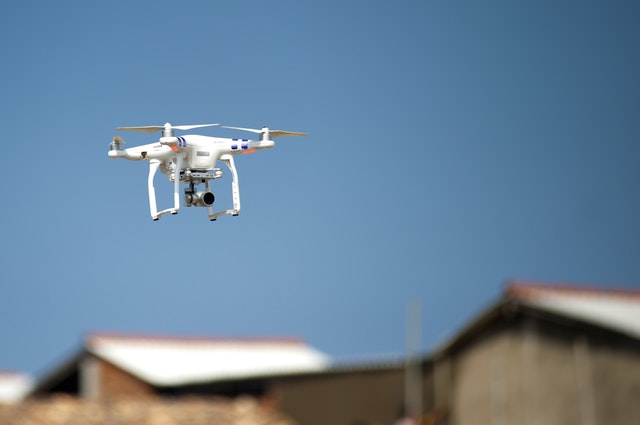
Automation Is Coming to Workers’ Compensation: Could Your Job Be Done by a Robot?

“We are coming closer to the point where not only cashiers but surgeons might be at least partially replaced by A.I.,” said former Federal Reserve Chairman Ben Bernanke in a recent interview.

The rapid integration of automation in all industries is undeniable. The surprising news is that there are many jobs that have traditionally required an expert—a highly trained human professional—that can be better performed by robots, at least in part.

Workers’ compensation is no exception. As the sun sets on the age of the expert and rises on the age of the machine, workman’s comp is a critical example of a field that will benefit from automation.

Continue reading Automation Is Coming to Workers’ Compensation: Could Your Job Be Done by a Robot?

Top 5 Articles of 2016

From how to use an inclinometer correctly to understanding why a panel QME gets involved in a work injury, read up on the best workers’ compensation content of the past year.

  1. What’s A QME?
  2. Muscle Atrophy
  3.  Exacerbation vs. Aggravation
  4. Activities of Daily Living
  5. How to use an Inclinometer

Do you have a workers’ compensation topic you’d like to see covered? Email us and we’ll put our best people on it!

Try RateFast Express today!

Automated Impairment Rating: The Science Behind RateFast

RateFast automates the impairment rating process, giving providers and injured workers the ability to generate accurate analyses of occupational injuries based on the AMA Guides to Impairment Rating.

But how is it done?

Listen to the podcast or keep reading to discover how CPA Josh Moore applies knowledge from accounting to the development of the RateFast impairment rating system.

Continue reading Automated Impairment Rating: The Science Behind RateFast

Playing the Game of Chicken in Workers’ Comp

The price that grocery stores pay for chicken is based on a particular index. This Washington Post article reveals how our entire nation agrees to pay the price of chicken based on this index. The newsworthy claim of the article is that if we really look at the open market, the stores are paying a price for chicken that is completely arbitrary, rather than the correct or natural price of chicken.

This is problematic not only for the consumer but for the industry as a whole.

As fascinating as this is, why are we discussing this on our workers’ compensation blog? What are the implications of this concept for work comp in California? Read on to find out.

chicken

Chicken” by Thomas Vlerick is licensed under CC BY 2.0


Continue reading Playing the Game of Chicken in Workers’ Comp

The Art of the Qualified Medical Exam

A QME is a medical professional who is credentialed by the state to perform qualified medical examinations required for certain workers’ compensation cases. For a more detailed look at what a QME is, take a look at this article.

Recently on the RateFast Work Comp Report podcast we interviewed Dr. Nissen about being a Qualified Medical Examiner (QME). Dr. Nissen discussed what he called “the art of the QME”—a skillset that involves using creativity and critical thinking to overcome several unique challenges.

A few of these challenges are described below.

Understanding the American Medical Association Guide to Impairment Rating and Evaluation.

Using the huge tome commonly known as the AMA Guides demands a depth-of-knowledge that few physicians take the time to develop. In order to serve as an effective impartial examiner, the QME is responsible for knowing the Guides back-to-front. This knowledge directly informs all other aspects of QME’s work with the claim, from performing the physical exam to determining impairment.

Assessing previous medical charts.

Medical charts for a single patient are often hundreds of pages long, and the ability to review them for relevant information takes practice, insight, and real-time analysis.

Performing an accurate physical evaluation.

The QME evaluates the patient according to the Guides, reviewing all thirty-four activities of daily living, and taking repeated measurements depending on the type of injury. A correct evaluation requires extensive knowledge of the Guides and rigorous attention to detail.

Creating a precise and correct impairment rating.

All of the relevant medical charts and all new information generated by the QME’s physical exam must be collected into the QME’s report. This data must be accurate; after all, the QME’s role is to bring objectivity to the claim, so reproducibility of results is key.

Conclusion

Dr. Nissen argues that in order for QME reports to truly benefit injured workers, physicians need a system for collecting consistent data. Accurate and meaningful data results in less legation, and ultimately the speedy close of the workers’ compensation claim.

Fortunately, such a system has been developed. RateFast is a total workers’ compensation solution that helps providers perform perfect exams, document patient medical histories, format and organize reports, and determine impairment ratings according to the AMA Guides. We urge medical providers, QMEs, and anyone who is interested in improving workers’ compensation to join RateFast for free.

Try RateFast Express today!

How Telemedicine Benefits Injured Workers

This is a post for medical providers, employers, and employees who are interested in understanding how telemedicine can improve workers’ compensation in California.

Doctor working on a digital tablet

When it comes to workers’ compensation, who benefits from telemedicine? The short answer: everybody. But the gains will be immediately apparent to the injured worker.

First, let’s think about how an injured worker currently experiences the workers’ compensation process.
Continue reading How Telemedicine Benefits Injured Workers

The Eagle Has Landed. Its name is RateFast!

California workers’  compensation care delivery technology history was made by a partnership between Alchemy Logic System Inc., dba RateFast (Santa Rosa, CA) and KuraMD (Roseville, CA).

Santa Rosa, CA, October 11, 2016 at 4:38 p.m.pst

Dr. John Alchemy, MD, QME successfully connected to an injured worker for a PR-2 visit using the HIPAA secure environment of KuraMD telemedicine platform. A complete history and physical exam was performed, followed by the creation of a legally compliant PR-2 report and an MRI request for authorization (RFA) written on Rate-Fast.com using only the Apple iPhone 6+ device. The iPhone was being simultaneously charged by a 2013 Tesla Model S 85 Kwh battery. This landmark event is the first documented instance of 100% mobile delivery of care to an injured worker.

Dr. Alchemy was later quoted saying, “I just never gave up hope. RateFast has already disrupted the category of workers’ compensation report writing and injury mapping. Now with KuraMD that delivery channel is totally mobile. Effective delivery of work comp care in California has just been turned on 24/7, anywhere, anytime-and it’s in your pocket now.”

Try RateFast Express today!